




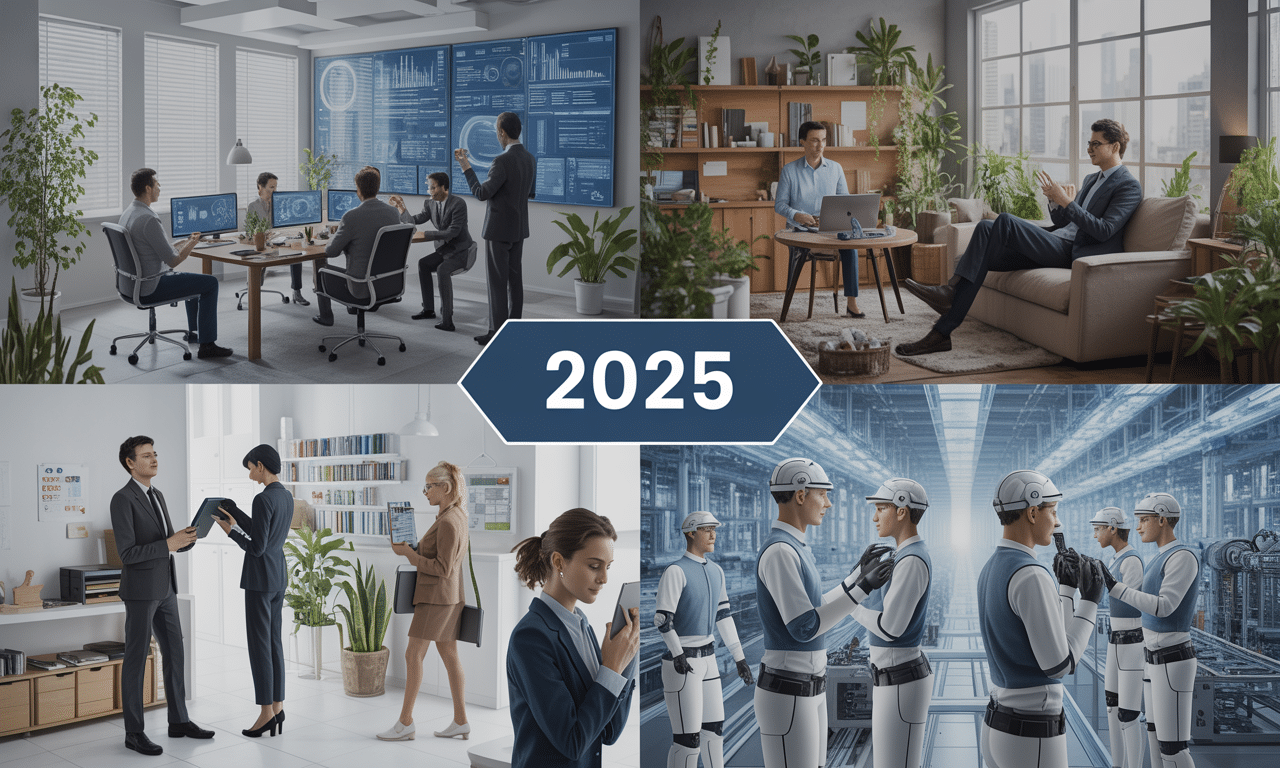
Resilience and subtle shifts define the outlook for the job market in 2025. After several years of heightened economic uncertainty and a rollercoaster of hiring booms and slowdowns, the market is approaching a delicate equilibrium. Demand for talent remains above pre-pandemic levels in numerous fields, but significant changes are rippling through the workforce. As artificial intelligence and automation accelerate, employers and job seekers alike are recalibrating their strategies. Sectors such as healthcare, green technology, and IT continue to thrive, while labor shortages and demographic shifts force organizations to rethink recruitment and retention. The evolving landscape of remote and hybrid work, emphasis on skills over credentials, and renewed focus on well-being have all left their mark. In this context, the year ahead promises both uncertainty and opportunity for those prepared to adapt and stay ahead of the curve.
Labor Market Resilience and the Outlook for 2025
Peering beneath the surface of economic indicators, one finds a job market balancing on the edge of resilience in 2025. Unemployment rates remain low and layoffs subdued, signaling that employers are opting to retain their workforce even as hiring cools. Yet, the pace of job creation, which soared in 2021 and 2022, has slowed, with monthly gains hovering just above what’s required to keep up with population growth.
- Unemployment rates are holding steady around historic lows (4.2%).
- Wage growth is stabilizing at 3.2% year-over-year, outpacing inflation.
- Key growth sectors: Healthcare, green energy, IT, and government roles.
- Job postings remain above pre-pandemic levels on platforms like Indeed, Monster, and ZipRecruiter.
The persistent headwinds, an aging population, the pace of immigration, and labor supply constraints, require companies to do more with less, prompting rising investment in automation and reskilling programs.
Sector Trends and the Cooling Pace of Hiring
Stories emerge from inside organizations: A healthcare provider in Boston expands aggressively, struggling to find enough nurses and medical technicians as baby boomers retire. Meanwhile, a software startup in Austin navigates the aftermath of the last tech hiring frenzy, now recalibrating team sizes and skill requirements.
- Healthcare, government, and leisure/hospitality have accounted for nearly 75% of all job gains, raising questions about the future stability of these sectors.
- Major platforms such as LinkedIn and Glassdoor show that technical skills and certifications in AI, data analysis, and green tech have surged in demand.
- Hiring and quits rates dipped to their lowest in a decade (outside the pandemic crash), but recent months hint at stabilization rather than further decline.
The labor market’s next phase depends on a delicate balance, if job postings and hirings reignite, smoother sailing awaits, but extended cooling could lead to stormier employment waters.
Remote Work, Hybrid Models, and the Rise of Flexibility
Once a radical experiment, flexible work has become a fixture in 2025. The split between home and office persists: 52% of companies now rely on hybrid structures, according to surveys tracked by Remote.co, with tech-enabled collaboration at the core. Employees shifting between home offices and coworking spaces report higher productivity and satisfaction.
- Remote job postings still surpass pre-pandemic levels on SimplyHired and CareerBuilder, though availability is gently sliding downward from the post-2022 peak.
- Sectors most notably retaining flexible work: IT, finance, digital marketing, and design.
- Employers that fully embrace remote or hybrid options report stronger retention and broader access to talent pools regardless of geography.
Flexibility is no longer a differentiator, it’s a baseline, driving the evolution of culture and daily operations across industries.
Freelance, Gig Work, and the Changing Shape of Employment
Freelance and project-based arrangements now account for 30% of global employment, according to estimates shared by Upwork. The gig economy, once the preserve of ride-share drivers or remote designers, now encompasses content creators, consultants, and data specialists alike.
- On-demand work appeals to Gen Z and Millennials seeking autonomy and balance.
- Companies are tapping platforms like LinkedIn, Upwork, and Gig-specific listings to augment core teams during busy cycles.
- Remote, flexible roles open up international competition, but also opportunities for upskilling and swift career pivots.
With economic uncertainty simmering beneath the surface, this trend offers both insurance and agility in the years ahead.
Technology’s Transformative Role in Job Creation and Worker Productivity
The adoption of artificial intelligence, especially generative AI, remains the biggest wild card on the employment landscape. From small businesses consulting Workable for AI-powered recruiting, to large enterprises implementing automated systems, the drumbeat of digital transformation is unmistakable.
- AI and digital skills are in greater demand: software development, cybersecurity, cloud computing, and data analysis roles are predicted to grow by 25% annually.
- AI-assisted hiring (via tools on Glassdoor, ZipRecruiter, and major enterprise platforms) is accelerating candidate screening, but also redefining required skill sets.
- Generative AI adoption has begun to boost productivity in high-tech fields and, increasingly, other sectors like insurance and medical services, though most roles still require human oversight.
Those who invest in upskilling or reskilling, through bootcamps, online courses, or new certifications, are most likely to thrive. The sector-wide shift from degree-based hiring to skills-based evaluation is tangible and carving new paths for professionals from varied backgrounds.
Green and Sustainable Careers: Opportunities on the Horizon
The transition to carbon-neutral economies is shaping a new employment frontier. With national and corporate pledges to achieve sustainability targets, roles in renewable energy, environmental science, green construction, and sustainable agriculture are multiplying.
- The International Labor Organization anticipates 24 million new green jobs globally by 2030.
- Companies seek engineers, project managers, and analysts versed in eco-friendly technology.
- Job boards like Monster and ZipRecruiter are listing more sustainability-linked roles than ever before.
For those with a passion for environmental impact and a willingness to master new tools, this is a sector where purpose and professional advancement often intersect.
Compensation, Benefits, and Workforce Well-being: The Worker’s Experience
Job seekers in 2025 encounter a landscape where the rules have shifted. While the surge in both pay and benefits seen during the post-pandemic “Great Resignation” has leveled off, competition among employers for key talent remains robust, especially where supply is scarce.
- Wage growth and real earnings have outpaced inflation in most sectors.
- Salary transparency dominates postings on LinkedIn, Indeed, and Glassdoor, now surpassing 57% of all listings.
- Expanded benefits are commonplace: mental health support, flexible scheduling, and wellness stipends.
- Declining requirements for years of experience and advanced degrees are unlocking doors for a wider applicant pool.
Corporate DEI (diversity, equity, and inclusion) efforts have intensified, 82% of organizations report expanded DEI programs, improving both innovation and employee satisfaction. The shift prioritizes not just pay, but purpose, equity, and holistic development.
Automation, AI, and Demographic Headwinds
Against a backdrop of slowing labor force growth and flattening participation rates, automation stands ready to fill some of the gaps, but not without displacing certain roles. Estimates from the World Economic Forum suggest 85 million positions may vanish due to automation by 2025, yet 97 million new ones are expected to emerge around overseeing, implementing, and improving technology.
- Positions that require creative, strategic, or empathetic skills are far less likely to be replaced.
- Skill-building and adaptability are now currency for future job security.
- Recruiters using Workable, Glassdoor, or AI-driven tools now focus on up-to-date portfolios, micro-credentials, and hunger for learning.
Those who lean in to continuous education and remain agile will have a competitive advantage as the balance between human and machine evolves.
FAQs: Navigating the Job Market and Employment Trends in 2025
What are the fastest-growing sectors for jobs in 2025?
The strongest growth is in healthcare, AI and tech, green energy, logistics, and enterprises focused on digital infrastructure. Check platforms like LinkedIn, Indeed, and Monster for rapidly expanding fields.
Will remote and hybrid work still be widely available?
Yes. While remote listings have dipped from their peak, they remain above 2019 norms. Flexible work is standard for many employers, especially in IT, marketing, and finance, explore roles on Remote.co and SimplyHired.
How can job seekers best position themselves for success?
Focus on upskilling in digital, AI, and data competencies; seek out visible projects; and highlight adaptability on your profiles on ZipRecruiter, Glassdoor, or CareerBuilder. Visibility and agility will open doors.
What benefits should applicants expect from employers?
A competitive package now often includes transparent pay, wellness and mental health programs, flexible schedules, and support for continuing education. Employers are also enhancing DEI initiatives and sustainability commitments.
Are freelance and gig opportunities viable for long-term careers?
Absolutely. Platforms like Upwork, LinkedIn, and dedicated gig channels house growing project-based roles across industries. Success depends on developing in-demand skills and maintaining a strong personal brand and network.