




| IN A NUTSHELL |
|
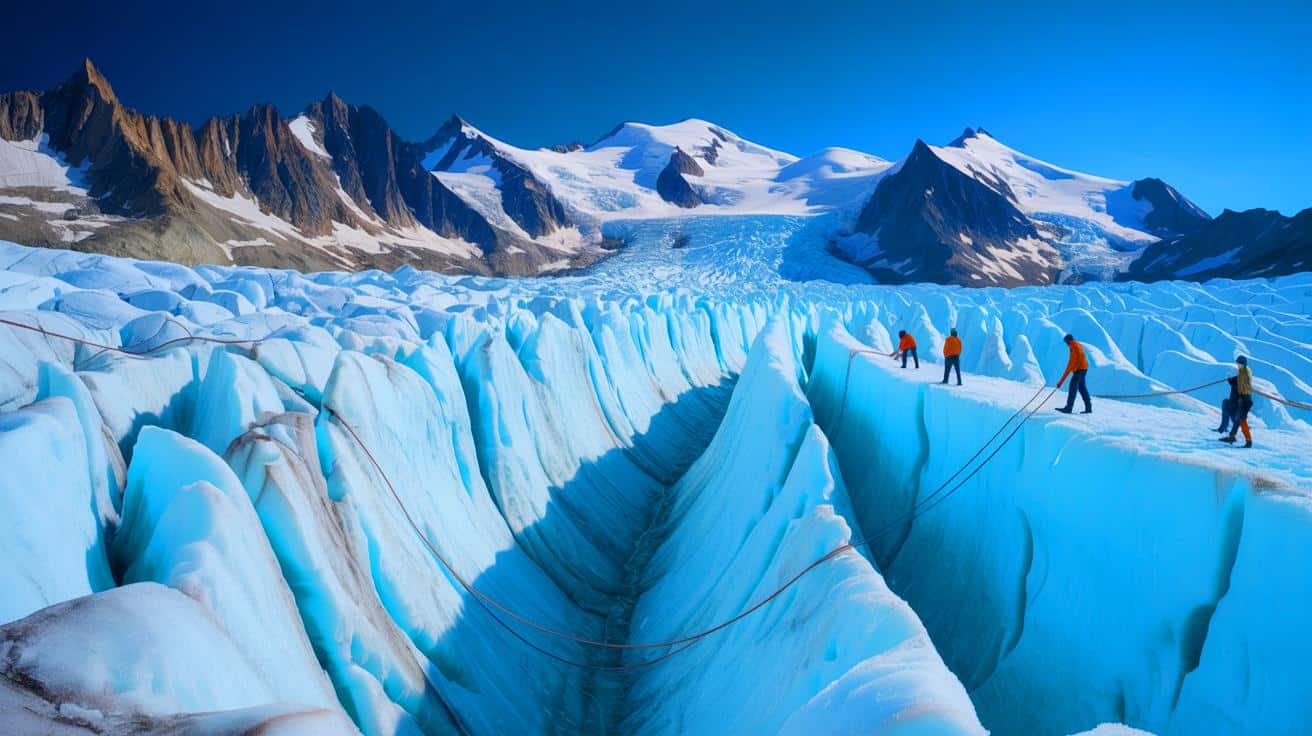
Researchers have made a groundbreaking discovery in the European Alps: a 131-foot-long ice core that dates back to the last Ice Age. This incredible find, conducted by the US-based Desert Research Institute (DRI), offers a unique window into Earth’s climatic past. By analyzing this ice core extracted from Mont Blanc’s Dôme du Goûter glacier, scientists have unearthed vital clues about environmental changes that occurred over 12,000 years ago. This discovery not only tells us about the climate of the past but also provides insights into the dawn of agriculture and the rise of industrialization in Western Europe. The implications of these findings are profound, offering a new perspective on our planet’s history.
Unveiling the Aerosol Record
The ice core extracted from the Alps is a treasure trove of information that helps scientists understand the past atmospheric conditions. Known as ice cores, these frozen archives contain microscopic clues, such as ancient dust, pollen, and pollutants, preserved over millennia. Through these tiny particles, researchers can reconstruct environmental changes that occurred thousands of years ago. The 131-foot-long ice core contains a detailed record of aerosols, which are tiny droplets and particles in the air. These aerosols have significantly influenced local climates by interacting with clouds and solar radiation.
Joe McConnell, Director of DRI’s Ice Core lab, emphasized the importance of this discovery by stating, “For the first time, we have a fairly complete Alpine record of atmospheric and precipitation chemistry going all the way back to the Mesolithic Period.” This record provides insights into two major climate states, glacial and interglacial, offering a comprehensive understanding of atmospheric precipitation chemistry across significant climatic changes. Such information is crucial for understanding the most extreme natural aerosol concentrations that might be expected in the future.
Insights from the Past
This ice core is not just a climate archive; it also offers a glimpse into a key period in human history. Found in central Europe, where Western civilization developed, the core sheds light on environmental conditions during significant cultural transformations. Researchers used specialized techniques, such as continuous flow analysis, to melt the ice layer by layer and measure its chemistry. By employing radiometric dating methods, they could establish the precise age of each layer.
A striking finding was the 3-degree Celsius temperature difference between the last Ice Age and the current Holocene Epoch. Additionally, the phosphorus record in the ice core unveiled a 12,000-year history of regional vegetation changes, illustrating the spread of forests during the warmer early-to-mid Holocene and their subsequent decline due to the rise of agriculture and industry. Furthermore, the core revealed that sea salt aerosols, major climate drivers, exhibited higher concentrations during the last Ice Age, indicating stronger westerly winds off Western Europe.
Revisiting Climate Models
The Mont Blanc ice core challenges previous climate models, particularly regarding dust aerosols. During the last Ice Age, dust aerosol levels were strikingly eight times higher than in the Holocene. This contradicts earlier models and highlights the significant role of Saharan dust plumes in Europe’s climatic past. Understanding these discrepancies is crucial for improving climate models and making more accurate predictions for future climatic changes.
Published in the journal PNAS Nexus, these findings emphasize the potential of ice cores to unravel past climates, ultimately aiding the development of more precise climate models. By exploring the interactions between aerosols, climate, and human activity during different periods, scientists can create better forecasts for the future.
| Key Parameter | Last Ice Age | Holocene |
|---|---|---|
| Temperature Difference | 3°F Lower | Current Baseline |
| Dust Aerosol Levels | 8x Higher | Baseline |
| Sea Salt Concentration | Higher | Lower |
As we explore the past through this remarkable ice core, we gain invaluable insights into the Earth’s climatic history and its impact on human civilization. With these revelations, we are better equipped to understand our environment and address future climate challenges. How will these insights shape our approach to climate change and conservation efforts in the coming years?