



| IN A NUTSHELL |
|
As electric vehicles (EVs) become increasingly integral to the global shift toward sustainable energy, the challenge of recycling their batteries looms large. These batteries, chiefly composed of lithium-ion cells, are crucial for powering everything from cars to portable electronics. However, the complexity and resource-intensive nature of recycling these batteries present significant hurdles. With millions of EVs expected to be on the roads, the need for efficient recycling solutions is more urgent than ever. This article delves into the technical, economic, and environmental challenges of EV battery recycling, as well as emerging solutions.
The Scale of the Challenge
The International Energy Agency (IEA) forecasts that by 2030, over 30 million EVs will be sold annually. Each of these vehicles is equipped with a lithium-ion battery pack that can weigh more than 1,000 pounds. These packs contain a complex mix of metals and hazardous chemicals. Despite the urgent need for recycling, only about 5% of lithium-ion batteries are currently being recycled. This is a stark contrast to the recycling rates of traditional lead-acid batteries, which exceed 95% due to their well-established recycling infrastructure.
The sheer volume of batteries reaching the end of their life poses a significant logistical challenge. Unlike lead-acid batteries, lithium-ion batteries are chemically complex and pose safety risks, making recycling difficult. Without scalable solutions, the potential environmental benefits of EVs could be undermined by a pile-up of toxic waste.
Technical Hurdles in Battery Recycling
The process of recycling EV batteries involves several complicated stages, each with its own set of challenges. Collection and safety are major concerns, as these batteries are classified as hazardous waste. They contain flammable electrolytes and high-voltage components, presenting risks of fires and toxic emissions if mishandled. Specialized facilities are required to manage these risks, which increases costs.
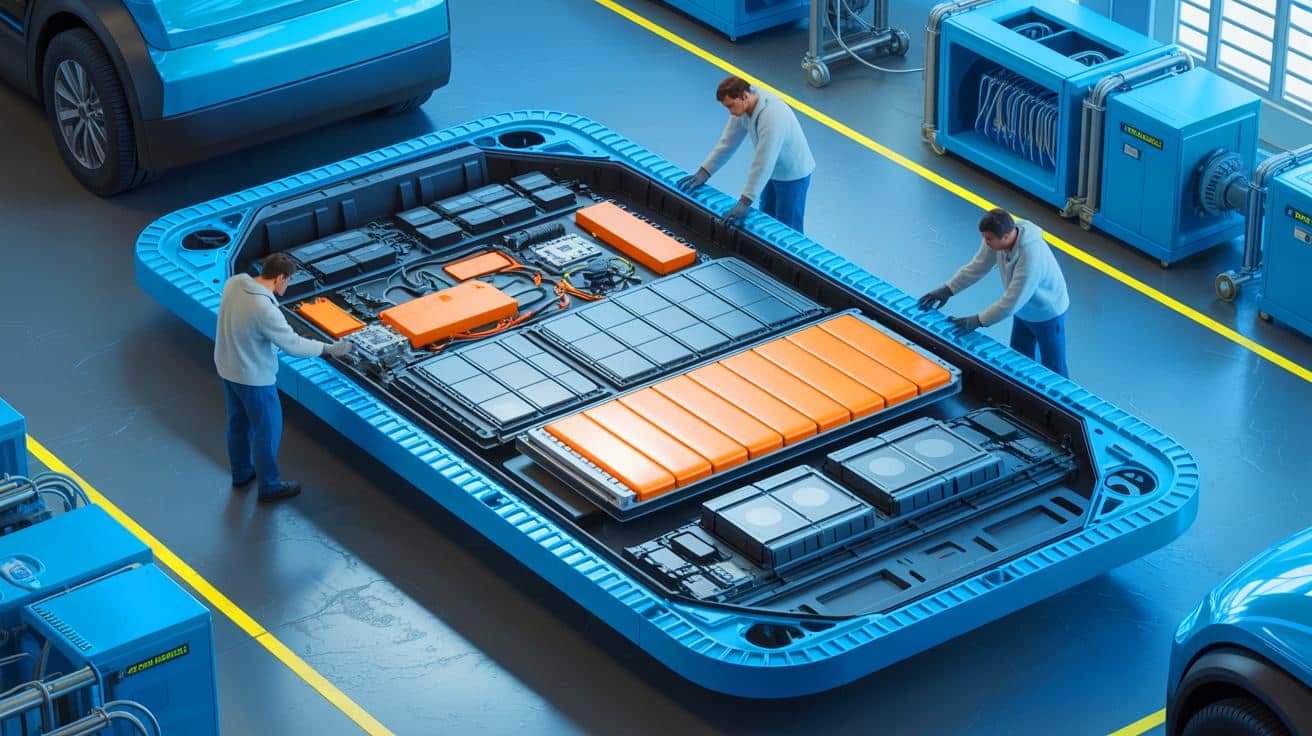
Disassembly presents another barrier. EV battery packs are intricate and require complex disassembly compared to simpler devices like portable chargers. The lack of standardization across different manufacturers further complicates this process. Additionally, current material recovery methods such as pyrometallurgy and hydrometallurgy have substantial drawbacks, including high energy consumption and low recovery rates.
Economic Barriers
The economics of recycling EV batteries are challenging. The costs associated with collection, transportation, and processing often outweigh the value of the materials recovered. Although materials like cobalt and nickel are valuable, fluctuating lithium prices and costly extraction processes discourage investment. The absence of standardized battery designs further hinders economies of scale.
Efforts are underway to establish guidelines and standards for battery safety and recycling, but the industry remains fragmented. Without global cooperation and regulatory incentives, recycling EV batteries could become economically unsustainable. The streamlined processes used for portable chargers highlight the need for industry-wide standardization.
Environmental and Ethical Concerns
The environmental impact of current recycling methods cannot be ignored. Pyrometallurgical processes consume large amounts of energy, often sourced from fossil fuels, which negates some of the carbon savings from EV use. Hydrometallurgical methods, while less energy-intensive, produce toxic byproducts that pose environmental risks.
Ethically, the reliance on mined materials for battery production raises sustainability concerns. Cobalt mining, in particular, is linked to human rights abuses in regions like the Democratic Republic of Congo. Improved recycling rates could reduce this dependency, but only if significant advancements are made in recovery methods. Otherwise, the demand for batteries will continue to drive harmful mining practices.
Emerging Solutions and Innovations
Despite these challenges, innovative solutions are on the horizon. Direct recycling methods aim to recover battery materials without breaking them down into elemental forms, preserving their chemical structure and reducing energy consumption. Companies like Redwood Materials and Li-Cycle are leading the way with promising pilot projects.
Battery design is also evolving, with manufacturers exploring modular designs that simplify disassembly. Second-life applications, such as repurposing EV batteries for energy storage, could extend their lifespan and reduce waste. Policy interventions, particularly those mandating manufacturer responsibility for end-of-life management, are critical to scaling these solutions. While the U.S. is beginning to explore such frameworks, international cooperation will be essential.
The path forward for EV battery recycling involves complex challenges, but also significant opportunities. With coordinated efforts across the industry, it is possible to turn this crisis into a catalyst for sustainable growth. How will policymakers, manufacturers, and consumers rise to meet this critical environmental challenge?