



| IN A NUTSHELL |
|
In a groundbreaking study, researchers have uncovered a potential link between routine eye exams and early detection of Alzheimer’s disease. By examining subtle changes in the retina’s blood vessels, scientists suggest that these could serve as early biomarkers for dementia risk. At The Jackson Laboratory, researchers found that mice with a common genetic mutation exhibited retinal vessel abnormalities similar to those seen in Alzheimer’s patients. This discovery could pave the way for early diagnostics, potentially allowing doctors to detect Alzheimer’s long before memory loss becomes apparent. The implications of these findings could revolutionize the way we approach Alzheimer’s prevention and treatment.
Retina as Brain’s Mirror
The retina, an extension of the central nervous system, offers a unique vantage point into neurological health. In their study, researchers at The Jackson Laboratory (JAX) focused on mice with the MTHFR677C>T mutation, which is present in up to 40% of humans. By six months of age, these mice displayed twisted and narrowed retinal vessels, patterns associated with impaired blood flow and cognitive decline.
Interestingly, these retinal abnormalities mirrored those found in the brains of the same mice, such as reduced blood vessels in the cortex and decreased cerebral blood flow. This correlation suggests that the health of retinal vasculature might reflect systemic issues affecting overall brain health.
Neuroscientist Alaina Reagan, a co-leader of the study, emphasized the significance of these findings. “We can see these wavy vessels in the retinas, which can occur in people with dementia,” she noted. This reflects a systemic problem, indicating that retinal health is closely linked with broader neurological conditions.
Mapping Disease Before Onset
Beyond just vessel abnormalities, the study highlighted disrupted protein activity in both the brain and retina of the mice. These disruptions, involving energy production, protein clearance, and vessel support structures, may elucidate how vascular dysfunction contributes to neurodegeneration.
Notably, the study also shed light on the influence of sex and age. Female mice exhibited significantly worse outcomes, with lower vessel density and fewer branches by 12 months of age. This finding aligns with the higher global incidence of dementia among women.
The researchers are now aiming to translate these findings to human subjects. Collaborating with clinicians at Northern Light Acadia Hospital in Maine, they are investigating whether similar retinal changes can be detected during eye exams in patients carrying the mutation. Such advancements could enable optometrists and ophthalmologists to identify individuals at risk long before cognitive symptoms manifest.
The Potential of Early Detection
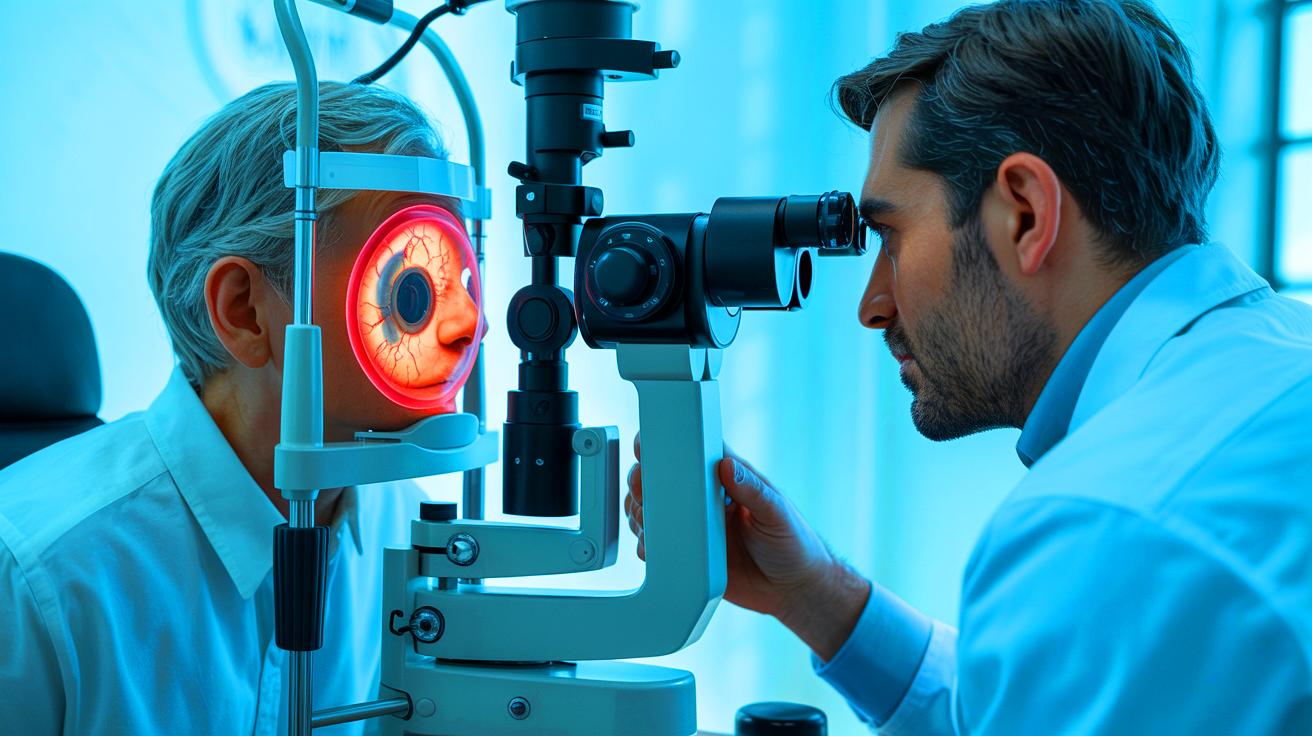
Routine eye exams could become a pivotal tool for early Alzheimer’s detection. With most individuals over 50 experiencing some form of vision impairment and undergoing regular eye checks, this approach could be seamlessly integrated into existing healthcare practices.
By identifying specific vascular signs, doctors could recommend further tests, enabling intervention potentially two decades before cognitive decline occurs. This proactive approach could significantly alter the trajectory of Alzheimer’s diagnosis and treatment.
“Most people over 50 have some kind of vision impairment and get checked annually,” Reagan noted. If eye health can indeed reflect brain health, this could revolutionize the detection and prevention of Alzheimer’s and related dementias.
“Fireworks of Relief”: Revolutionary Test Transforms Diabetes Detection for Millions Across America
Implications for the Future
The implications of this study are profound. By utilizing the eye as a diagnostic tool for the brain, researchers hope to transform how Alzheimer’s and related dementias are detected and treated. This approach not only promises earlier detection but also opens up possibilities for preventive measures that could delay or even stop the onset of cognitive decline.
Published in Alzheimer’s & Dementia, the study underscores the importance of interdisciplinary research in addressing complex health challenges. By bridging the fields of ophthalmology and neurology, scientists are paving the way for innovative solutions that could benefit millions worldwide.
As these findings continue to unfold, they prompt critical questions about the future of Alzheimer’s research and treatment. How will healthcare systems adapt to integrate these diagnostic advancements? And what other conditions might be similarly detectable through non-invasive means like eye exams?