




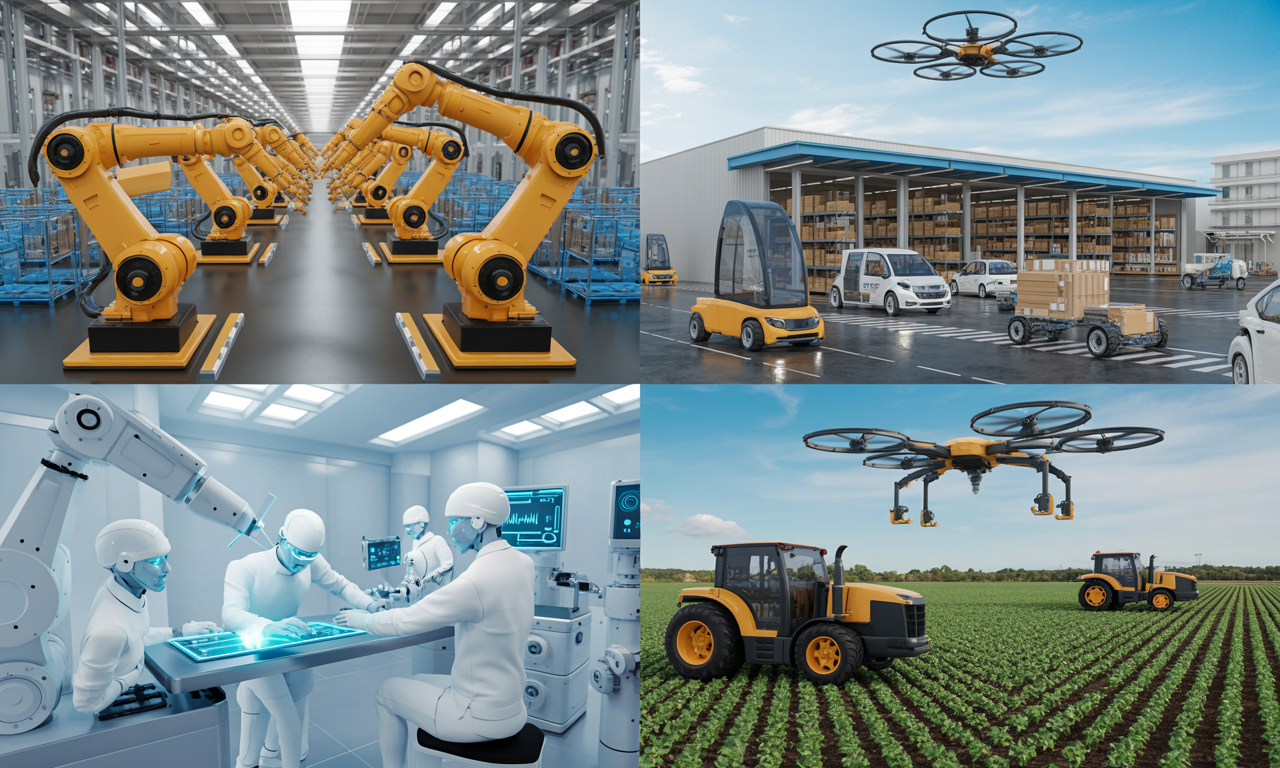
At the dawn of 2025, the pulse of industry beats stronger, and smarter, than ever before. Once confined to science fiction and niche manufacturing, automation and artificial intelligence have rapidly become the backbone of evolution, from the humming floors of Tesla’s gigafactories to Amazon’s hyper-efficient warehouses, and even deep within the digital core of multinationals like Siemens and Rockwell Automation. These advances are not merely rewriting operational manuals; they’re redefining what’s possible, blending human ingenuity with digital precision. But how do these changes feel on the ground in sectors that stretch from logistics and production to healthcare and finance? Let’s step into the workshops, labs, and control centers transformed by this new wave: a story shaped by innovation, opportunity, and a steadfast drive for progress.
AI and Machine Learning: The Foundation of Automation in Industry
Industry experts and major players alike agree that the rise of AI and machine learning forms the cornerstone of this industrial revolution. In 2025, Siemens, IBM, and GE Digital are all deploying advanced algorithms that analyze oceans of real-time data, revealing inefficiencies and hidden patterns across manufacturing lines, logistics arms, and power grids.
- Predictive maintenance now stops breakdowns before they occur, saving time, money, and reputation.
- Quality control solutions powered by computer vision catch defects at lightning speed, giving manufacturers a new level of assurance.
- Dynamic resource allocation makes supply chains more resilient, with AI detecting shifting consumer demands.
This transformation enhances productivity across sectors and lays the groundwork for hyper-personalized customer experiences. The most forward-thinking organizations are those, like Honeywell and ABB, that combine data-driven decisions with agile adaptation, creating workplaces where humans and machines co-innovate daily.
Stories from Industry: Predicting the Unpredictable
One automotive supplier, integrating IBM’s AI-driven analytics, cut machine downtime by 30%, outperforming competitors still reliant on routine checks. This leap turned a simple maintenance schedule into a potent competitive advantage. In another case, Amazon’s fulfillment centers use machine learning not just for robotic routing, but to anticipate peak order patterns and adapt on the fly.
- Faster time-to-market for new products
- Reduced operational bottlenecks
- Stronger alignment between supply and demand
Each milestone reiterates a major lesson: success belongs to those who experiment, analyze, and evolve with automation’s possibilities.
Robotics, Cobots, and the Human Touch in Automation
Robots are no longer hidden behind safety glass, they stand shoulder-to-shoulder with people in 2025’s leading industries. The advent of collaborative robots, or cobots, reshapes environments previously viewed as exclusively human. Companies like Rockwell Automation and ABB are at the forefront, building cobots that understand gestures, react to touch, and self-adjust in real time, making factory floors safer and more productive.
- Assembly lines where humans direct complex tasks and cobots handle hazardous or repetitive work
- Healthcare environments using robotics for patient records and medication sorting, leaving doctors with more time for direct care
- Retail distribution teams that dynamically combine human problem-solving and robot accuracy, think Amazon’s seamless warehouse synergy
This blend isn’t about replacement; it’s about amplification of skills. The benefit is twofold: improved job satisfaction for people and operational reliability for enterprises. In every case, embracing the human-machine partnership pays dividends far beyond cost savings, unlocking creativity and accelerating innovation.
The Collaborative Renaissance: A Closer Look
Take Siemens’ electrification plants as a prime example. Here, the deployment of AI-adaptive cobots saw error rates drop 45% in tool assembly, while employee upskilling programs ensured teams loved the shift rather than fearing it.
- Employee retraining and upskilling initiatives
- Real-time productivity monitoring
- Lower workplace injury rates
This transformative approach is echoed across sectors wherever robotics and human intelligence meet, especially as companies realize that tomorrow’s workforce thinks with both silicon and experience.
Industrial IoT and the Emergence of Smart Factories
The narrative of change would be incomplete without the Industrial Internet of Things (IIoT). In 2025, connected sensors and edge devices have become the nervous system for manufacturing, logistics, and utilities. Unity Technologies and GE Digital are helping businesses build digital twins, virtual replicas of physical systems, which enable real-time simulations and deep operational insights.
- IoT sensors tracking asset health and performance around the clock
- Supply chain delays anticipated and rerouted automatically
- Energy usage optimized down to the individual machine level
Edge computing further hastens decision cycles, giving companies like Tesla the ability to improve production yields in minutes instead of hours. By merging IIoT, AI, and lightning-fast 5G networks, factories are turning into living systems, adaptive, agile, and sustainable.
The Role of Cybersecurity in a Connected World
Yet, all this connectivity brings new risks. In the race to digitize, giants such as Microsoft and IBM focus intensely on AI-powered security, from pattern-based threat detection to blockchain-secured transaction frameworks.
- Multi-layered authentication for device networks
- Real-time response to cyber incidents
- Continuous compliance monitoring for sensitive industries
Protecting the heart of industrial automation is an evolving challenge, and trust must be built into every layer, ensuring innovation thrives in a secure environment.
Sustainability, Workforce Transformation, and the Ethical Dimension
The automation wave is as green as it is smart. ABB and Honeywell spearhead solutions that integrate renewable energy management and optimize resource consumption inside production plants and smart buildings.
- AI-led climate controls reducing both emissions and power bills
- Automated waste tracking for zero-waste manufacturing goals
- Digital systems managing renewable energy flows in real time
Simultaneously, the narrative of job loss is giving way to a story of workforce reinvention. Upskilling is a universal mandate, Microsoft and Amazon now run internal academies, helping employees move from manual roles to digital architects and data analysts. The key, experts say, lies in collaboration: aligning technological progress with human-centered values.
Addressing the Ethical Questions in Automation
No story of AI-driven transformation is complete without careful debate on its broader impact. Whether tackling algorithmic bias or setting clear standards for human oversight, IBM and Unity Technologies advocate for frameworks that guarantee fairness and transparency.
- Open auditing of AI-driven decisions
- Privacy-by-design in all new solutions
- Proactive workforce engagement in ethical guideline creation
Ultimately, building a future where technology serves all equitably means making ethics a central thread in every breakthrough.
FAQ: The Realities of Industrial Automation in 2025
How are leading companies like Tesla, Amazon, and Siemens leveraging automation for competitive advantage in 2025?
Tesla deploys intelligent robotics and predictive analytics on production lines, Amazon uses AI-driven logistics and warehouse management, while Siemens integrates digital twins and IIoT for improved efficiency. Each builds advantage by blending automation with continual learning and rapid adaptation.
What industries are seeing the greatest transformation from industrial automation?
The most significant changes are unfolding in manufacturing, logistics, healthcare, and energy. Sectors relying on complex, data-driven operations benefit most from automation’s ability to optimize performance and reduce costs.
Why is cybersecurity increasingly important as automation expands?
With more industrial systems connected via IIoT and edge computing, the risk of cyberattacks grows. Microsoft, IBM, and Honeywell are illustrating how proactive cybersecurity strategies are essential to protecting sensitive operations and maintaining trust.
How does automation support sustainability goals?
Automation drives energy savings, reduces waste, enables smart resource allocation, and integrates renewable energy sources seamlessly. Companies like ABB and Honeywell show how automation makes green operations not just possible, but profitable.
What new career paths and skills are emerging as automation evolves?
There’s rising demand for data scientists, AI engineers, automation architects, and ethics consultants. Vocational programs from players like Microsoft and upskilling initiatives from Amazon pave the way, ensuring the workforce is empowered rather than displaced.