



| IN A NUTSHELL |
|
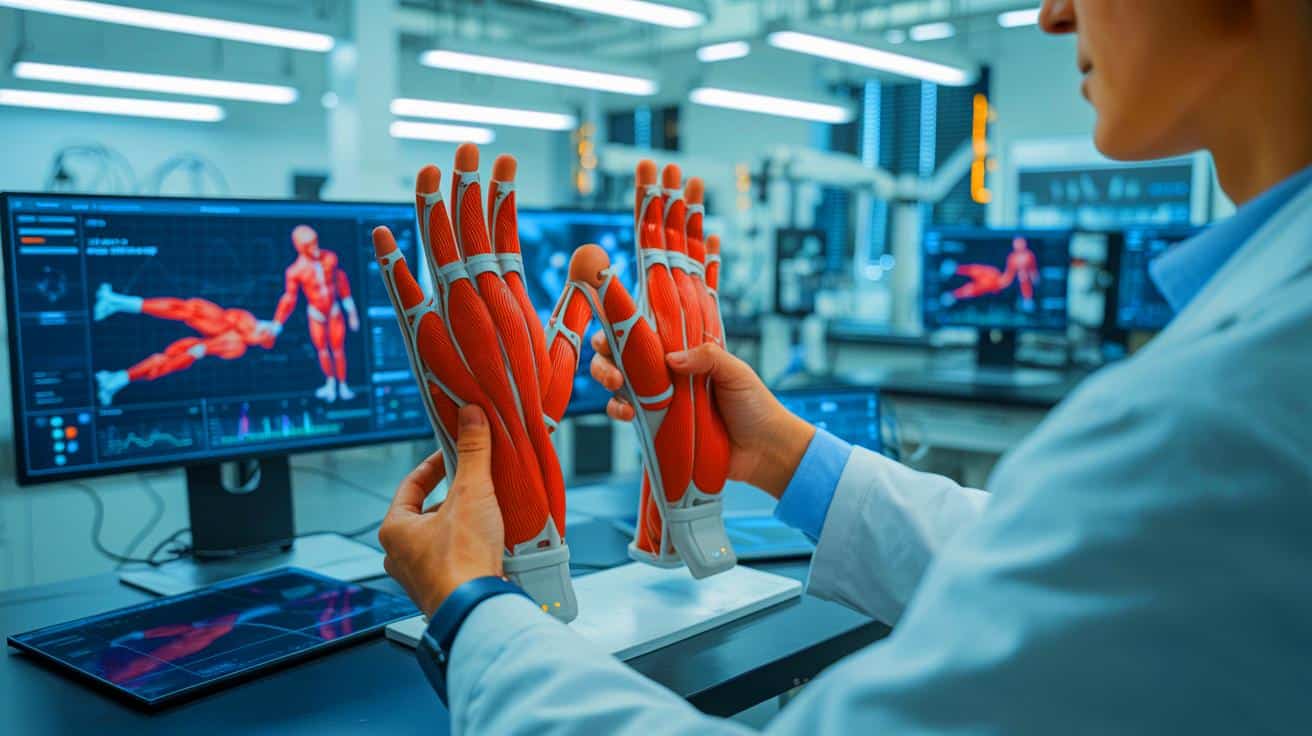
In the realm of technological advancements, researchers at the Georgia Institute of Technology have unveiled a groundbreaking innovation: AI-powered muscles crafted from lifelike materials. These artificial muscles are not only soft and flexible but also responsive, closely mimicking the natural movements of human tissue. By integrating intelligent control systems, these muscles can learn and adapt in real time, offering a new wave of possibilities for rehabilitation and prosthetic development. By using hierarchically structured fibers, these muscles are designed to sense, adapt, and even remember previous movements, paving the way for a future where technology seamlessly integrates with the human body.
Flexible and Responsive Artificial Muscles
In the popular imagination, robots are often depicted as rigid and metallic entities, akin to characters like The Terminator or RoboCop. However, the research being conducted at Georgia Tech is challenging that perception. “What we’re developing is the opposite,” said Hong Yeo, a leading professor in mechanical engineering. These new artificial muscles are crafted to be soft and flexible, closely resembling human tissue.
Yeo’s team employs machine learning algorithms to fine-tune these materials, ensuring they exert just the right amount of force or flexibility required for various tasks. This adaptability is key, as these muscles are not just passive responders to commands; they are designed to learn from experience and self-correct. Such capabilities allow for smoother and more natural movements, which are crucial for individuals recovering from medical conditions like strokes or limb loss. The development of these muscles is not just about physical rehabilitation. It’s about restoring confidence and independence, offering a sense of self to those who need it the most.
Enabling Artificial Muscles with Memory-Based Intelligence
The recent publication in Materials Horizon delves into the advancements made in enhancing artificial muscles with intelligence. The study highlights innovations in functional materials, structural designs, and manufacturing techniques. A standout feature of these muscles is their memory-based intelligence, which allows them to perform a range of pre-programmed movements while adapting to changing conditions.
These muscles can perceive and respond to environmental changes through sensory feedback, showcasing an advanced level of adaptability. Despite the promising advancements, challenges remain, particularly in scalability and the integration of multifunctional capabilities. The research team is optimistic about overcoming these hurdles. “We always think about not only function but adaptability,” Yeo noted. For artificial muscles to be truly effective, they must work harmoniously with the body, adapting fluidly to its natural movements. This adaptability is what distinguishes a mere machine from a prosthetic that feels truly alive.
Addressing Challenges in Scalability and Integration
While the progress in developing these AI-powered muscles is remarkable, the journey is not without its challenges. One of the primary concerns is scalability. As promising as these artificial muscles are, scaling them for widespread use remains a significant hurdle. Researchers are actively working on dynamic reprogramming and integrating multifunctional capabilities to ensure these muscles can be produced and used on a larger scale.
Furthermore, the integration of these muscles into the human body presents its own set of challenges. They must be capable of surviving within the body without triggering an immune response. This requires the development of materials that are not only durable but also biocompatible. The goal is to create a seamless integration where the artificial muscles are not seen as foreign entities but as natural extensions of the body. This vision is what drives the ongoing research and development efforts at institutions like Georgia Tech.
The Future of AI-Powered Muscles
Looking ahead, the future of AI-powered muscles is filled with potential. Researchers are exploring the possibilities of these muscles in various fields, from medical rehabilitation to advanced robotics. As the technology advances, the hope is to create prosthetics and assistive devices that offer unparalleled levels of functionality and user experience.
The ultimate aim is to develop artificial muscles that are not only technologically advanced but also accessible to those who need them. This will require continued research, collaboration, and innovation across multiple disciplines. As these efforts continue, one can’t help but wonder: How will the integration of such lifelike technology redefine the boundaries between humans and machines, and what ethical considerations will arise as these technologies become more prevalent in our daily lives?