

UK’s First Purpose-Built Science Tower to Track Greenhouse Gases in Real Time
A new 100-metre observatory in Angus is designed to collect continuous atmospheric measurements, helping researchers refine estimates of greenhouse gas emissions across Scotland and the wider UK.
 By
Farah Choudhury
By
Farah Choudhury
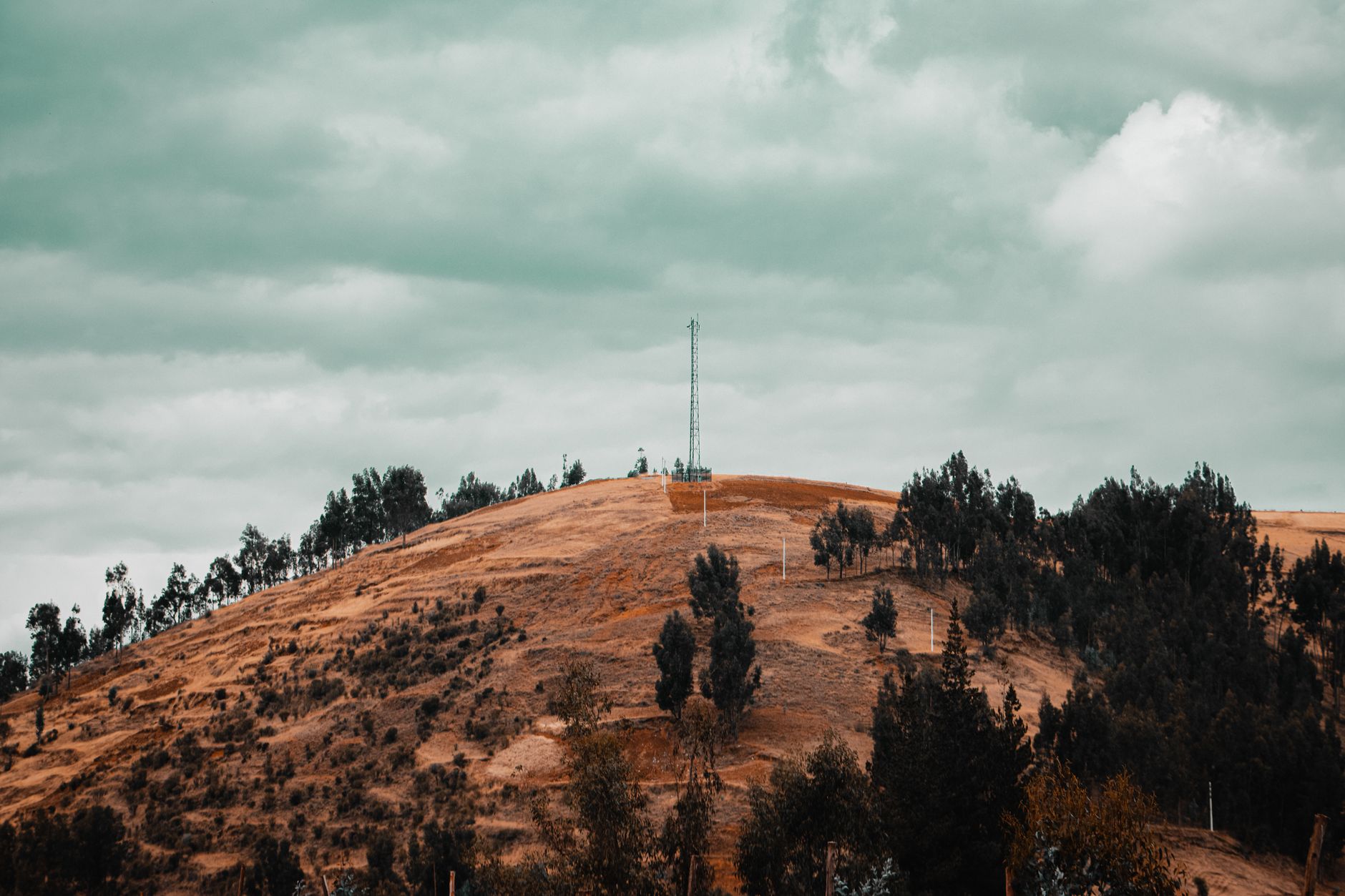
The UK’s first purpose-built tall science tower has begun operating in Angus, where it will collect continuous measurements of greenhouse gases in the atmosphere. The 100-metre Scottish Observatory for Atmospheric Research, known as SOAR, is intended to give researchers more detailed information about emissions and changing concentrations over time.
In brief
- The Scottish Observatory for Atmospheric Research is a 100-metre tower at Balruddery Farm in Angus, near Dundee.
- The facility is jointly owned and operated by The James Hutton Institute and the University of Edinburgh.
- SOAR is designed to measure more than 60 greenhouse gases, with continuous air sampling at 50 and 100 metres.
- The observatory is part of the UK Deriving Emissions linked to Climate Change network.
Located at Balruddery Farm near Dundee, SOAR is jointly owned and operated by The James Hutton Institute and the University of Edinburgh. The facility is designed to measure more than 60 greenhouse gases, including carbon dioxide, methane, nitrous oxide and hydrofluorocarbons.
The new site adds a Scottish observation point to the UK’s emissions-monitoring infrastructure. For readers following developments in science, its significance lies in the distinction between estimated emissions inventories and direct measurements of the air above a particular region.
How the SOAR tower measures the atmosphere
SOAR continuously samples air at two levels, 50 metres and 100 metres above the ground, using sensitive instruments. Collecting samples at height is important because the air reaching the tower can reflect conditions over a wider area than a measurement taken at ground level alone.
The observatory is intended to produce detailed, real-time information about emission sources and how atmospheric concentrations change. This does not mean that every individual release can be traced with certainty to a single cause. Rather, the measurements provide an additional line of evidence for researchers assessing patterns in greenhouse gases.

Dr Jagadeesh Yeluripati, a senior scientist at The James Hutton Institute, said that emissions estimates have largely relied on “bottom-up accountancy methodologies”, which can carry significant uncertainty. In the same announcement, he said tall-tower atmospheric monitoring can provide direct and independent estimates that help improve the accuracy and reliability of those calculations.
“Greenhouse gas emission estimates largely rely on bottom-up accountancy methodologies, which are associated with significant uncertainties,” Dr Jagadeesh Yeluripati said.
The tower’s measurements are traceable to international standards, according to reporting on the launch of the Angus facility. That enables comparisons with other atmospheric monitoring stations, an important feature for research that depends on measurements being assessed across different locations.
A new observation point for Scotland and the UK
SOAR is part of the UK Deriving Emissions linked to Climate Change, or DECC, network. The network brings together atmospheric observation sites that support work on understanding greenhouse gas emissions.
Its location in Scotland is central to the project’s role. Professor Mathew Williams, lead scientist at the University of Edinburgh, said the site fills a gap for the UK and Europe because, depending on wind direction, it can sample air arriving from the North Atlantic, northern parts of the UK and continental Europe.
That geographic position gives the tower a different atmospheric perspective from other monitoring locations. It may help researchers examine regional patterns and test how well existing knowledge of greenhouse gas emissions corresponds with observed concentrations.

SOAR also has links with other research activity, including the Scottish Land Lidar Programme. The facility has agreements with institutions including the National Physical Laboratory and the University of Bristol for research into greenhouse gas emissions and atmospheric processes.
Why land use matters to the observatory’s research
The Angus setting places the tower near agricultural land, while Scotland’s emissions profile includes substantial contributions from agriculture and land use. The observatory’s data is expected to support research into the carbon footprint of land-based sectors, including peatlands, forestry and livestock.
This is a research function rather than a direct emissions-reduction measure. The tower will not itself cut greenhouse gas output, but its observations can help refine emissions estimates and inform more targeted climate action. The value of the facility will therefore depend on how its measurements are combined with wider scientific analysis and decision-making.
Scotland has pledged to reach net-zero emissions by 2045. In that context, SOAR provides a new means of observing atmospheric gases at height and over time, adding evidence that can be used alongside established emissions accounting methods.
By bringing continuous sampling to Balruddery Farm, the project gives the DECC network another vantage point for studying the atmosphere over Scotland. Its contribution will be measured in the quality and consistency of the evidence it supplies, rather than in any single reading from the tower.
Featured image. Source: Pexels. Credit: Erik Torres. License: Pexels License.