



Mezzotint etched by John Jones after the original by William Redmore Bigg. Titled “Black Monday. or the Departure for School” and printed in 1790 by W.B. Bigg, London.
This is a genuine mezzotint from the late 18th Century and not a modern reproduction, bid with confidence as authenticity is guaranteed . Printed on artistic quality heavy stock mounted on cardboard. Size of the plate is 16 by 21.25 inches, measuring 21.25 by 26.75 inches overall including matte.
18th Century English Genre.
A similar work by William Bigg in 1781, entitled “School Boys Giving Charity to a Blind Man.” has a retail price list of £420 (approx. $610) and it is being offered by a London based Dealer in Antique Prints as Lot No.65, click on lot number to see details.
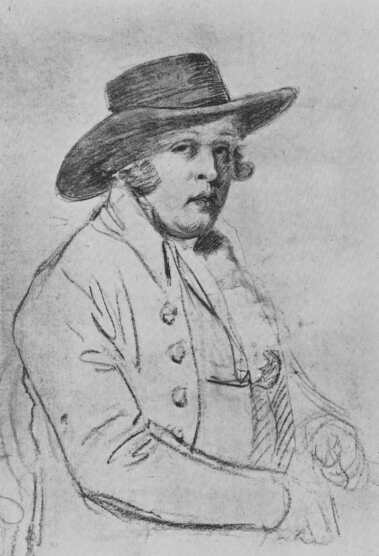
William Redmore Bigg ( b London, 6 Jan 1755; d London, 6 Feb 1828). English painter. In 1778 he entered the Royal Academy Schools in London. His master there was Edward Penny, who was among the first English artists to paint genre scenes depicting virtuous and charitable actions, and Bigg followed the older painter’s example. His first two exhibited paintings, Schoolboys giving Charity to a Blind Man (1780) and A Lady and her Children Relieving a Distressed Cottager (1781; both untraced), are typical subjects, which recur throughout his career. Bigg was a prolific exhibitor, showing at the Royal Academy almost annually until his death and, from 1806, at the British Institution. He was elected ARA in 1787 and, after an exceptionally long gap, RA in 1814. When not concerned with specifically moral themes, he painted small portraits in oil and pastel, conversation pieces and, most commonly, rustic genre paintings. The latter were frequently pendants; Girl at a Cottage Door, Shelling Peas and Girl Gathering Filberts (both 1782; Plymouth, City Mus. & A.G.) and Woman in a Cottage Interior and Man with a Cottage Exterior (both 1793; London, V&A) are typical. Bigg’s style is less elegant and refined than that of Francis Wheatley but more delicate than that of George Morland, although in 1825 John Constable was asked to inspect three paintings by Morland that proved to be coloured and varnished engravings by Bigg, Morland and Wheatley respectively. Edward Dayes described Bigg’s colouring as ‘sometimes chalky and feeble’, adding, perceptively, ‘nor has he the power, but seldom, to interest beyond the subject’, but his genre paintings and portraits have charm, and his repertoire of kind schoolboys, distressed sailors and the virtuous poor was very popular in his lifetime and often engraved.