
The League of Ovaltineys
 By
Ellis Marwood
By
Ellis Marwood
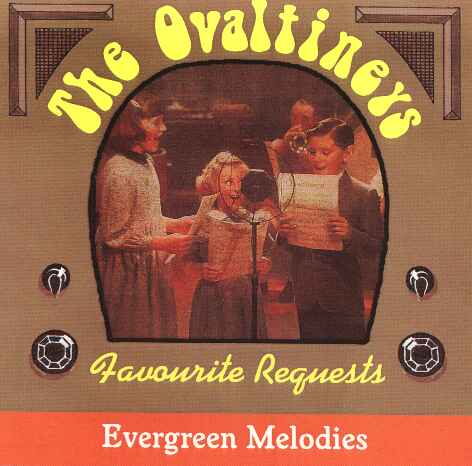

TRACK LISTINGS
We Are the Ovaltineys;
Happy Days are Here Again;
Painting the Clouds With Sunshine;
On the Sunny Side of the Street;
Tiptoe Thro’ the Tulips;
Shine on Harvest Moon;
The Umberella Man;
Let’s All Sing Like the Birdies Sing;
On the Good Ship Lollipop;
An Apple for the Teacher;
Rolling Along;
Teddy Bears’ Picnic;
Who’s Afraid of the Big Bad Wolf;
Heigh Ho;
Winter Wonderland;
Lambeth Walk;
Wish Me Luck as You Wave Me Goodbye;
Ovaltineys’ Farewell;
Introduction to the International Broadcasting Company Limited*;
Radio Luxembourg jingles*;
Ovaltineys’ live broadcast – plus extracts from other Radio Luxembourg shows and jingles*;
Quaker quarter hour – live broadcast with Carroll Levis*;
Trevor Hill and original Ovaltiney, Marie Lewis*:
* – Bonus tracks – CD only

Ovaltine Stood (and stands) for the innocence, comfort, wholesomeness and safety of English childhood. Originally a drink marketed by a Swiss doctor called George Wander, it was (and is) known as Ovomaltine on the Continent, but the name was shortened when it was first introduced here in 1910. Advertising was always Ovaltine’s forte, and the rosy-cheeked dairymaid in the ads with her basket of fresh eggs and sheaf of barley epitomised its spirit of simple purity.
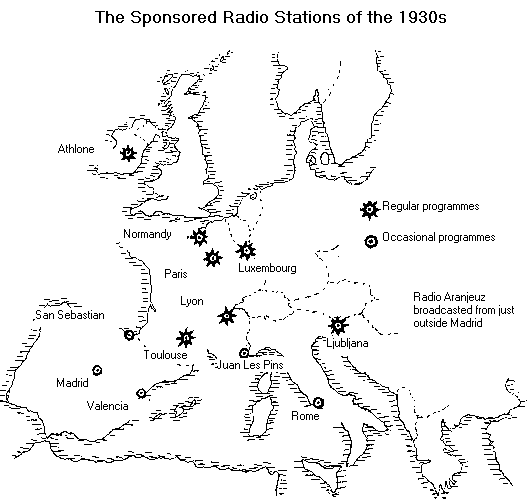
The Ovaltiney Club, founded in 1935 and broadcasting from Radio Luxembourg every Sunday evening from 5.30 to 6 p.m. became a secret society for children, with its own badges, rule books, and inside codes: by 1939 it had five million members. The programme’s signature tune, ‘We are the Ovaltineys’ , became probably the best-known jingle in the world; and was so well embedded in the national subconscious that the company was persuaded to revive it as part of its television commercial in 1975.
Though primarily a children’s drink, Ovaltine was supplied to the armed forces in both world wars. Tommies sang ‘we are the Ovaltineys’ as they marched, in sharp contrast to the German preference for the ‘Horst Wessel Song.’ It has been an official drink at Olympics since 1932, went up Everest with Sir Edmund Hillary and with Freya Stark to the Arabian desert.
It figures, needless to say, in the Betjeman* oeuvre: ‘He gives his Ovaltine a stir, and nibbles at a petit beurre.’ Though still sold simply as a malted food drink, its actual ingredients are somewhat more banal and clinical: barley and malt extract, to be sure, but then dried skimmed milk, sugar, whey powder, glucose syrup, vegetable fat, full cream milk powder, fat reduced cocoa, caseinates, egg powder, emulsifier, stabilisers, flavouring and vitamins. The Ovaltine dairymaid still smiles winsomely out from the goo at us; and her drink still conveys instant childhood.
Continue reading