


This new page is a mask for information on Radio Normandy.
Information to be added as it becomes available.
“The First Pirate” – the story of Captain L.F. Plugge and Radio Normandy in (about 30 minutes of audio).

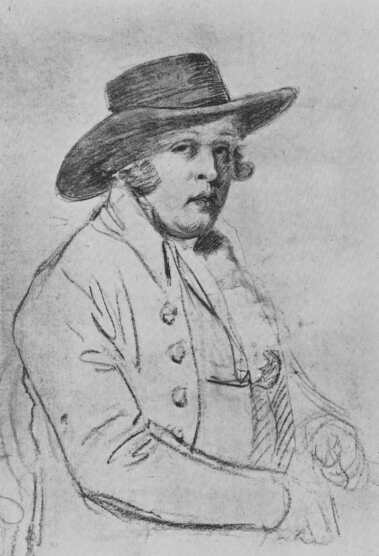
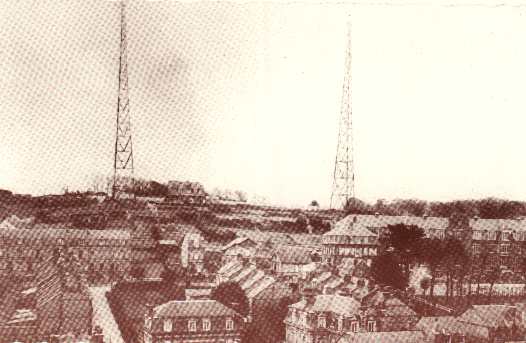
This photograph is taken from the postcard booklett of Radio Normandy photographs – available from the France Radio Club.
The first English language commercial programmes were broadcast to Europe in 1925. Captain L.F. Plugge had persuaded Slefridges to sponsor a fashion talk over Radio Paris which broadcast from a tranmitter in the Eiffel Tower. Only three people wrote to say that they had heard the broadcast.
The International Broadcasting Company (IBC), started transmissions over Radio Normandie which had a 25kW transmitter located at Fécamp on the French coast. These broadcasts were heard all over Southern England. Later power was raised to 20kW and on a wavelength of 269.5m commercial programmes were aimed at a receptive audience. In March 1938 the wavelength was changed to 212.6m and later to 274m. Programmes were mainly recorded on discs in London and featured fifteen minute sponsored shows. Live programmes also went out.
In late 1939, the orchestral bit of ‘Keep the Home Fires Burning’ was used as closedown theme of Radio International, Fécamp (Radio Normandie before the outbreak of war). The IBC tried to revive the station as broadcasting to the British Expeditionary Force in France, but with all-American programmes, and news bulletins from the Havas Agency (read by Bob Danvers-Walker). They were closed down after about six weeks.
The following correspondence was sent to me by Charles Dobson (aka Rodney) who was 14 at the outset of the War (received by me on 10/11 April 1999, and reporduced here with permission).
I don’t know much more, except the background from memory (I was 14 at the
time!). On the declaration of war (3 Sept), the BBC closed all its
national and regional programmes, and substituted a single ‘BBC Home
Service’ , consisting of news, gramophone records and (several times daily)
Sandy Macpherson at the Theatre Organ. Meanwhile they were moving staff
and equipment to the Colston Hall, Bristol.
The IBC station at Fécamp resumed transmissions in English at either the
end of September or early October, playing gramophone records of light and
dance music in daylight hours up to approx 7.15 pm. At 15 minute intervals
they played the old Radio Normandy chime, followed by the announcement, ‘
This is the International Broadcasting Station, preparing a new service’.
The announcer was neither Roy Plomley nor Bob Danvers-Walter, but may have
been David Davis (I don’t really know). Their programme production
company, Universal Programmes Corporation, based opposite Broadcasting
House at 37 Portland Place, was unable to provide recorded programmes or
deliver them to the Caudebec studios via Thomas Cook. The IBC bought and
shipped a large quantity of transcribed programmes from America direct to
France, and appointed Bob D-Walker chief announcer and news reader.
(Before the war, news in English was never broadcast from Radios Normandy,
Luxembourg or Lyons).
After the 7 pm news from the Havas agency, the station closed each night
with ‘Keep the Home Fires Burning’ from, I’m fairly sure, your record by
Debroy Somers – certainly it was an identical arrangement. When closed
down by the French authorities, probably at UK Foreign Office request, they
signed off in the usual way, but followed with ‘La Marseillaise’.
A few small posters appeared in grocers’ shops in Brighton and south coast
towns promoting at least one programme and its sponsor. This may have been
Carson Robison and his Oxydol Pioneers, a popular Sunday morning show
before the war, but I forget now. Incidentally, there were no full
commercials with the wartime broadcasts, just the introductory and closing
announcements and the name of the sponsor, probably added at the station.
A few weeks after the closedown, the BBC started their own ‘Forces
Programme’, which later became the ‘Light’ and now Radio 2.
Hope of some interest. Do you also know the story of the AEF programme?
Rodney
The last gasp of Radio Normandy and the IBC was probably in the Spring of
1940, when a Paris commercial station (normally heard in French)
transmitted a 15 minute programme in English on Saturday afternoons.
Following the theme tune, Quand Madelon, the announcer (anonymous) said:
‘This is the Paris broadcasting station, Poste Parisien. By arrangement
with Radio International, we present “Tommy’s Quarter Hour”. ‘
There followed four or five gramophone records, but no advertising. Poste
Parisien itself, and all the French commercial stations, closed down on the
military defeat, and were replaced by a single station, Radio Paris, under
German control. After the Liberation, General De Gaulle forbade their
revival, but Radio Luxembourg resumed transmission in French (and later
English and German), followed by Europe No.1, a new station in the Saar,
founded by the pre-war commercial radio entrepreneur, Louis Merlin. Radio
Luxembourg has been replaced by the brand name ‘RTL’, used by both radio
and tv stations in several countries and languages. (See CLT-UFA site,
http://www.clt-ufa.com
I have a very vague idea that after WW2, a former senior manager of the
IBC, possibly Carl something, tried to start again as Radio Manx from the
I0M, but died before the project could take off. This was to be on MW or
LW, beamed to North West England, not FM, like the present Manx Radio.
Sorry I forget his name, but an obituary was in the Times, mentioning Radio
Normandy and his popularity with the staff. CLT-UFA took up his idea in a
joint venture with RTE, Atlantic 252, still on air despite complaints
from the UK, and have phased out Radio Luxembourg. (Do look at the CLT-UFA
Web site; it has a lot of history and some good sound-bites).
People in this field were incredibly persistent. For some, it was more a
cause’ than a business.
Charles Dobson (aka Rodney)
Here is the wonderful French site about Radio Normandie : Dans les années 30, l’ancêtre des radios libres en France s’appelle Radio Normandie. Située à Fécamp et Louvetot entre Yvetot et Caudebec en Caux, le “poste” est très écouté et émet même en anglais le dimanche ! A rough English translation is provided